Wednesday, October 25, 2017

Conscience Guidance Lesson


Grade level: K-8th

Lilia Hueso, Lindsey Earl, and Kyle Johnson
(SJV)


Rationale and clear purpose for the unit or lesson (it’s a summary of your group planning): Students will understand and be able to explain conscience. Pre and post-assessments will show students’ growth through students writing and verballing telling what the definition of conscience is.  Activities such as scenarios, art projects, and poems will be utilized to demonstrate an understanding of conscience.  Students will be able to recognize their conscience and be able to act on it.  To achieve the learning objective, there will be consistent checking for understanding, through simple thumbs up and various activities.  We will know students have met the learning objectives through how they define conscience and are able to apply it to the different areas.


Applicable ASCA standard(s), objective(s), competency(ies): 
“Students will…” (e.g.: Students will understanding the relationship between learning and work).
Identify specific standards (found in your ASCA green book).

B-SMS 1: Students will demonstrate the ability to assume responsibility.
B-SMS 2: Students will demonstrate self-discipline and self-control.
B-SS 5: Students will demonstrate ethical decision-making and social responsibility.

Christian Living Curriculum objective(s) and competency(ies): 

Identify healthy choices that promote well-being (e.g. exercises, good nutrition, laughter, relationships, prayer, meditation, communal faith life).
Recognize how emotion affect one’s sense of well-being.
Demonstrate the ability to advocate for oneself and on behalf of others.
Evaluate personal behavior as appropriate, inappropriate, safe, or dangerous.
Explain reasons for having and following rules and regulations.
Explain the role of conscience formation in making moral decisions.


Developmental Learning Activities designed to meet the objective(s)

What are the activities? Activities for the counselor? Activities for the student?

The Treasure Map Activity comprises most of the entire guidance lesson.  It is introduced at the start of the lesson, and guides the rest of the lesson with other activities for students, such scenarios, a poem, and drawing.

How do these activities meet the objectives of the lesson?

Each activity explores conscience through a different aspect of Multiple Intelligences.  They guide students to think about what they would define conscience as and what their conscience tells them in a variety of circumstances.

Do the activities maintain the activity level of the students (keep them engaged)?

The overarching Treasure Map Activity provides a consistent goal through the entire lesson, acting as a game and challenge for students.  As previously stated, the activities vary and meet students who may learn through different Multiple Intelligences.

Cultural Considerations

Different cultures and families may have differing expectations on how to respond in different situations.  Because of this, people may have different action responses to the thoughts that their conscience provides.  Another cultural consideration is the religious aspect.  For our audience, it is appropriate to bring in religion, however in some environments, this wouldn’t be appropriate.

Developmental Tasks

The pre and post-tests are differentiated from the lower grades to the higher grades, as the writing level may get in the way of assessing the level of understanding of the topic focused on.

Stressors

Possible stressors could include reading and writing levels, especially for younger grades or students at lower academic levels.  Another could be sharing in front of the class.

Introduction

Treasure Map Activity:
Introduce Treasure Map Activity.   

Tell the class that we are talking about conscience, which is a lot like a map for our own lives.
Tell the class that we have an envelope filled with pieces of a treasure map, but we need their help to get the pieces all together.  In order to get each piece, there are tasks the class needs to complete.  Once a task is completed, tape the corresponding piece up in the correct order.  The tasks encompass the entire lesson, and include a variety of the following numbered parts.


Pre-Assessment:

1. What is conscience?
Activate previous knowledge: (remind students they already know    something about the topic)

K-2: Have students raise their hands if they know what conscience means, and call on students to answer:
“What is conscience?”
“What do you think of when you hear ‘conscience’?”

3-8: Hand out blank notecards to each student and have them write down their definition of “conscience” on it.

School Definition:

K-4th: “God helps us to choose to be good people”

5th-8th: “Conscience is the voice of God within us. A developed conscience helps us make decisions that support truly loving relationships.”

Our definition: “The feeling or voice inside you that helps push us towards what is right”

2. Scenario: 

Have the class discuss the following scenarios with a neighbor, then as a class:

K-2 “You see a classmate taking something from the teacher’s desk without asking”

3-7 “You are out shopping with your friends and see them take a toy and put it in their pocket”

8 “If your family was without food, and didn’t have the means to get more, would you steal a loaf of bread in order to feed your starving family? Why or why not?”

3.“The Voice” Poem

Pass out and read “The Voice” by Shel Silverstein

“There is a voice inside of you
that whispers all day long,
'I feel that this is right for me,
I know that this is wrong.'
No teacher, preacher, parent, friend
or wise man can decide
what's right for you - just listen to
the voice that speaks inside.”

Ask questions:

“What words stick out to you?  Underline, circle, or highlight them.”

K-2: “Where does this voice come from?”

3-8: “Read the line ‘No teacher, preacher, parent, friend or wise man can decide what's right for you’ What feelings or thoughts do you have?”

4. Scenario: 

Have the class discuss the following scenarios with a neighbor, then as a class:

K-2 “Your classmate forgot their lunch. What does your conscience tell you to do?”

3-7 “You’re driving and pass by a man with a cardboard sign saying ‘Hungry,need food’.  What does your conscience tell you to do?”

8 “What is something your conscience is telling you to do in your community that needs attention?”

5. Fill in the blank for Bible verse:

“Therefore I do my ____ always to have a _____ __________ toward ____ and all _____” Acts 24:16

Answer: “Therefore I do my best always to have a clear conscience toward God and all people” Acts 24:16
Have conversation about what it means to have a “clear conscience toward God and all people”?

6. Art Activity:

Draw what you think your conscience looks like.

Pass out paper and have students draw individually

After all the map pieces are put up and put together, say that there is one more task that needs to be done before we find the treasure.


Closing and Follow up

Review the definition of “conscience” described earlier in the lesson.  Tell the class that the map is complete, and bring out candy as the “treasure”.  Pass out to each student (or give to teacher to distribute at their own time).

Post-Assessment:

Have students fill in the blank on the bottom of the poem: “Conscience is __________”.

Resources

6 prepared map pieces, paper, pencils, coloring materials, candy.


Wednesday, October 18, 2017

Empathy

Guidance Lesson: Empathy
Aleksey Fischer, Katalina Chacon, Kelly McCarthy, Megan Steilen

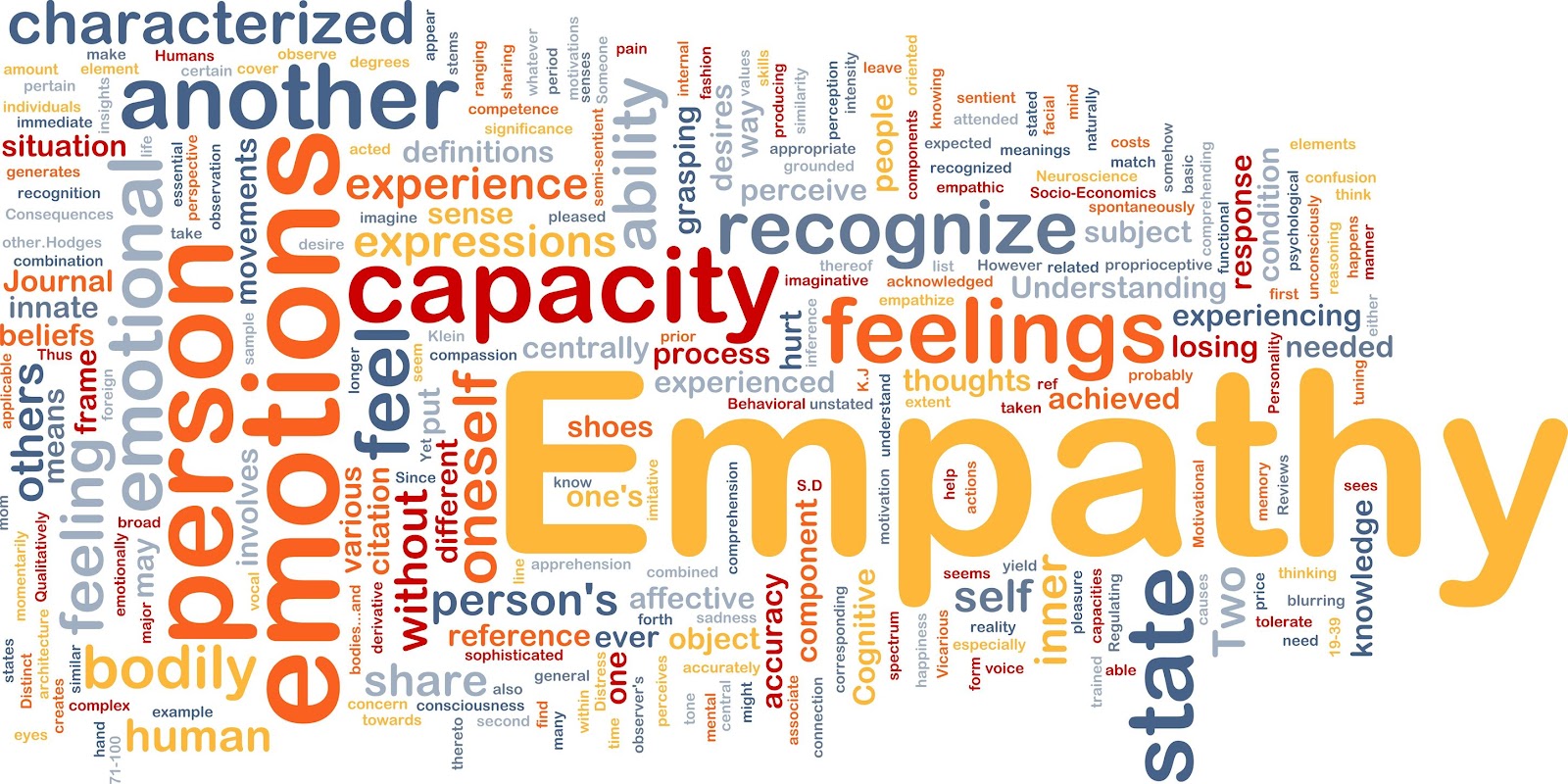
Image result for empathy    The guidance lesson is geared toward K-8 students. The lesson focuses on empathy and the impact it has in our lives. What is empathy? How do we show empathy? What is the difference between empathy and sympathy? Students will explore what empathy looks, and learn to show empathy in their own lives. In the form of scenarios, students will be challenged to truly see with the eyes of another, listen with the ears of another, and feel with the heart of another.

Guidance Lesson
Topic: Empathy
Grade Level: K-8

Rationale and clear purpose for the unit or lesson: The students are to learn about empathy in order to understand how to show empathy in their daily lives. It is important for students to understand what it is like to be in someone else's’ shoes so that they can better help others through whatever struggles.

Applicable ASCA standard(s), objective(s), competency(ies):
                       
  • B-SS 2. Create positive and supportive relationships with other students       
  • B-SS 3. Create relationships with adults that support success
  • B-SS 4. Demonstrate empathy
  • B-SS 9. Demonstrate social maturity and behaviors appropriate to the situation and environment
Image result for empathy showing
Introduction:
  • Overview/Objectives:
    • The purpose of this lesson is to teach students the importance of showing empathy. The objective is for students to learn the definition of empathy and identify ways to be understanding of others struggles.

  • Activate previous knowledge:
    • Ask students what they know about empathy.
    • Write ideas on the board as the students are sharing out.
    • Ask students how they have experienced empathy in their own lives.
    • Read book to younger kids.

  • Create anticipation - encourage learning:
    • Encourage students to remain mindful during activities and lesson.
    • Encourage students to engage in respectful conversation with one another.

Developmental Learning Activities designed to meet the objective(s):
  • Share definition of empathy - the ability to understand and share the feelings of another.
    • Empathy is also like seeing with the eyes of another, listening with the ears of another, and feeling with the heart of another.
  • For 3-8, differentiate between empathy and sympathy - first, ask students if they know the difference between the two.
    • Image result for empathyRole play an example for the class - have someone (school counselor) share out that they are feeling very sad because their dog ran away.
      • Have one school counselor reply with “Well, at least you have another dog.”
      • Have another school counselor reply with “I am so sorry. I am not sure what you’re feeling, but I am here for you.”
      • Ask students which response was empathetic/sympathetic.
  • For K-2 students will read a book “Stand in My Shoes” by Bob Sornson, then split into 2 groups. Grades 3-8 students will be put into 3 groups. Each group will be given a scenario.  Each scenario will have a pair of shoes next to it that corresponds to the scenario.
  • Have a school counselor read the scenario for grades K-2. For grades 3-8 have one student read the scenario out loud. (see scenarios below)
  • Each group will spend 5-8 minutes reading/discussing a scenario.
    • What does the person feel? How would you feel? Open discussion
  • Groups will rotate to the next scenario and continue discussion.
  • Bring everyone together. Have students share their experience. What is empathy?
  • Considerations: scenarios may provoke strong emotions. School counselors should be aware and look out for students.

Assessment/Evaluation:
  • At the end of the lesson, we will ask the students three things that they learned today in order to assess if they understand what empathy is.

Closing and Follow-up:
  • Thank you so much for learning with us today! Today we talked about empathy and did some pretty cool activities.
  • Ask three things they learned today.
  • Image result for empathyBring back the definition.. “Remember… Empathy is also like seeing with the eyes of another, listening with the ears of another, and feeling with the heart of another.”
  • Challenge them to show empathy for others.

Resources:
  • Attached scenarios to prompt empathy discussion
  • Book - “Stand in My Shoes” by Bob Sornson
  • Three pairs of shoes

Scenarios:
  • K-5:
  • Example A: At recess, you notice Tommy getting teased by a bully because of his new haircut. The bully keeps calling him names and Tommy looks like he is about to cry. The bell rings to signal that recess is over and Tommy walks by you towards the classroom, wiping tears from his eyes. How is Tommy feeling? What would you say to Tommy?
  • Example B: Jane just moved from England and is a new student at the school. When the teacher asks Jane to tell the class about herself, you hear some classmates laughing at her accent (the way she talks). Jane’s face gets red and she is clearly embarrassed. At lunch, you notice that Jane is sitting alone at the lunch table and you go over to talk with her. How is Jane feeling? What would you say to Jane?
  • Example C: Jimmy notices his mom is crying.  Jimmy then finds out that his mom just lost her job and is feeling nervous about how she will buy food for Jimmy and his brother and sister.  How is Jimmy feeling? How is his mom feeling? What could Jimmy say to his mom?
  • Example D: You come home and find your little sister going through your things in your room. You get angry and ask her what she is doing. She starts to cry and says she can’t find her favorite stuffed animal. You know that it’s not in your room and tell her she can’t go through your things without asking. She sits down on the floor and cries even harder. She says she won’t be able to sleep without her favorite stuffed animal, even though she has a lot of other stuffed animals. You go into her room to look for her favorite and cannot find it. You come back to your room and sit on the floor with her. What would you say to your sister?
  • Example E: At recess, Sally and her friends were playing kickball.  Sally has been practicing kickball a lot lately because she wants to do the best she can.  After a very close game, Sally’s team won! Sally is smiling and jumping up and down.  How do you think Sally is feeling? What could you say to Sally?
Grades 6-8
  • Example A: John, an eighth grader at All Saints Middle School, has always dreamed of playing baseball in high school.  He practices for four hours a day, everyday, in hopes of making the varsity team next year.  Today John was playing soccer at recess and slipped and broke his leg.  What do you think John feels like walking into class? What is an example of an empathetic response you could give John tomorrow as he walks into class on crutches.
  • Example B: Sandy is a sophomore at Central Valley High School.  She is very excited for the school dance tonight, and has a few friends she plans to get ready and go with.  On the way to the dance, Sandy tells one of her friends that she might ask Larry to dance, and hopes he would want to.  Once they arrive at the dance, Sally asks Larry to dance, and he responds back with “No way Sandy”.  Sally turns around, and walks back to her friends, tears in her eyes.  What is Sally feeling? As Sally’s friends, how could you show empathy?
  • Example C: Louis is an incoming freshman at Gonzaga University, and originally from Florida.  Yesterday he flew in with his parents from Florida to Spokane, and today they are going to help him move into his dorm room. After two hours of unpacking, his parents both give him a hug and say their goodbyes.  As Louis’s roommate, you are seeing how hard this is on him.  What do you think he is feeling right ?  What is a way you could show empathy?  
  • Example D: Kate put on her new pair of shoes this morning. She was excited to wear them to school. While in class, another student notices her new shoes and makes fun of her. What is Kate feeling? What would you say to Kate?

Reflection
The best way to teach empathy is to show empathy. Model what empathy looks like to students throughout the guidance lesson whenever possible. Be very mindful of the grade level when introducing this lesson. Incorporate a video about empathy into the lesson if technology is available.

Helpful Tips
Remember to always be mindful of each student’s, personal struggles and sensitive to cultural backgrounds. Scenarios can be built around each school’s climate for best responses. Consider the classroom layout and size for best scenario rotations. In advance, briefly discuss the topic with the teacher, take any feedback and make accommodations as needed. Bringing in a variety of shoes for each scenario makes the scenario more real. Allow students enough time to discuss each scenario.

Friday, May 12, 2017

Behavior Management in Middle School

BEHAVIOR MANAGEMENT IN MIDDLE SCHOOL


Behaviors Commonly Present
Puberty: self-esteem, self-doubt or emotional regulation struggles
Social Aspect: peer pressure, friendships, dating
Independence: parent-child power struggles
Confusion: body, future, self-concept, identity
Social Media Use


High Risk Behaviors
Bullying/victimizing
Depression/suicide
Experimentation: sexual activities, drugs, alcohol
Rule breaking
Eating disorders


Strength-based Strategies 
1.      Building and maintaining meaningful and positive faculty-student relationships based on trust, care, and support. 
a.      Match the student's language. Demonstrate interest and confidence in the student as a person. Be available. Validate feelings.  
2.      Find the exceptions. 
3.      Clearly communicate expectations, rules, procedures, etc.  
4.      Externalize the behavior.  
a.      Encourage ownership of actions and problem solve with the student.  
5.      Develop high expectations and promote opportunities to contribute. 


Wednesday, March 29, 2017

Guidance Lesson: Self-Worth

Lesson Plan for 6th Grade: Self-Worth!                                  
(Created for students with a musical intelligence)


Students with a strong musical intelligence have a tendency to show sensitivity to rhythm, melody and sound. They may study or focus best with music in the background, and they often notice non-verbal sounds in their environment. These students learn best through rhythm, melody and music.  

Rationale and clear purpose for the unit or lesson (it’s a summary of your group planning):

This lesson will focus on defining and building self-worth for students, particularly those students who learn through a musical intelligence. The topic of self-worth will be explored through discussion, questions, a video, a group activity, independent time, partner time, and a final closing discussion. As a result of the lesson, we hope that students have better understanding of self-worth and feel that they are able to recognize their own self-worth. We also hope that students will understand that self-worth can change, and that they will begin to develop tools in which they can change their own. Through the use of discussion and questions, we will grasp whether or not students have met the objectives and have enjoyed the lesson.  

ASCA Standards:
B-LS 2: Demonstrate creativity
B-SS 2: Create positive and supportive relationships with other students
D- SMS 3: Demonstrate ability to work independently

Introduction
  • Overview: The purpose of today’s guidance lesson is to explore the concept of self-worth, have students apply it to themselves, and do so through a musical intelligence lens. Various activities will be presented in order to explore this topic.

  • Activate previous knowledge: Does anyone know what self-worth is? How do you describe self-worth? Do you think it is important, how so?


  • Create anticipation: Today, we are going to learn more about self-worth and how it is important in your lives! Be prepared to have fun, participate, and leave with a stronger sense of self-worth and love for yourself!
Developmental Learning Activities designed to meet the objective(s)

What are the activities?
  • Introduction to self-worth through lecture, conversation, and a video.
    • Ask questions to sense previous knowledge
    • Provide definition of self-worth: The way you think and feel about yourself.
    • Kids with high self-worth… Feel good about themselves
      • Feel proud of what they can do
      • Believe in themselves, even when they don’t succeed at first
      • See their own good qualities
      • Feel liked, loved, and respected
      • Accept themselves

·         High Self-worth helps you have the courage to do new things. What new things have you tried lately?
·         Self-worth can grow and change! Focus on the things you are good at, always try your best, and spend time with those that make you happy. What is something you are good at?  Who makes you happy?    
·         On a scale of 1 to 5 with your fingers, please show us how well you understand self-worth at this point (1 being still confused, 5 being totally understand!)
·         Play Video about self-worth   


Acknowledgement of own self-worth through rhythm clapping game.
§  We will sit in a circle on the floor and set a beat with a clap, asking each student to say a word about their own self-worth as the beat falls on them. Once we go through a few times, ask students if there are any other versions of this game they would like to play that relate to self-worth. (Examples: words that describe your friends self-worth or words that aren’t good for your self-worth)


  • Individual time to write a poem, rap, or song about their self-worth.
·         Emphasis on rhyming when possible, with a provided example presented from Evan beforehand. Once time is up for creative writing, students will be assigned partners in which they will share their written work. After that, we will ask for people to share with the whole group, but won’t expect that everyone do so.
·         Pairs will be assigned through pieces of paper that have a first name or a last name of a musical artist and they will need to find their match.
·         Music will be played in the background as students work on their written assignment
·         Once everyone has a chance to share that wants to, ask the following: please show a thumbs up, sideways, or down about whether or not this assignment helped you recognize your own self-worth.

  • Wrap up the guidance lesson through discussion, questions, and a check for understanding.
    • Reminder of the definition of self-worth: the way you think and feel about yourself.
    • Questions to ask:
      •  What did you learn today?
      • How has your view of self-worth changed?
      • Can everyone please provide one word they are feeling after participating in this assignment (go around the circle and share).
    • Close with homework for next week and reminder to visit us anytime!  


Bloom’s Taxonomy:
·         Students will be remembering past information about self-worth, understand the concept through activities and discussion, apply self-worth through their participation in groups activities and sharing with others, analyze the concept by addressing it in their own lives, and create a poem about their own self-worth. However, we could not think of a situation in this lesson when a student would feel the need to evaluate regarding self-worth.

Assessment/Evaluation
·         We will summarize the lesson by restating the the definition of self worth. We will reflect back the good examples of self-worth we heard from the students throughout the lesson.  
·         We will check for understanding throughout via the examples written in this lesson plan.

Closing and Follow up
·         We will be back in your classroom next week for a follow up guidance lesson. Your homework is to find a song that either describes your self-worth or increases your self-worth as you listen to it. Please have the song name when you come to class next week and we will listen to a brief portion of everyone’s song!
  • Please remember that we are your school counselors and love to spend time getting to know you. Please stop by our office, near the front doors, anytime, we’d love to see you!

Resources
·       Whiteboard and markers, access to music to play in the background, access to technology for video and powerpoint